

Parimatch casino Plinko
Introduction
I’ve seen plenty of casino formats rise fast on streams, social feeds and game lobbies, then fade once the novelty wears off. Plinko has behaved differently. It looks almost too simple to matter: you drop a ball from the top of a pegboard, it bounces left and right, and eventually lands in a prize slot with a set multiplier. Yet in practice, Parimatch casino Plinko keeps players engaged for a reason that goes beyond visual simplicity. The tension is immediate, the result is easy to follow, and each round is short enough to create a very distinct rhythm.
That is exactly why this format deserves a closer look. On the surface, Plinko appears more straightforward than a slot machine, crash games details or roulette table. But once I examine how the ball path, risk setting, row count and payout distribution work together, the picture becomes more nuanced. The interface is minimal; the experience is not. A low-risk session can feel controlled and repetitive, while a high-risk setup can become sharply volatile within minutes.
In this review, I’ll stay focused on the actual product: the Plinko game at Parimatch casino, how it works, what it offers, where the pressure points are, and what a player should realistically expect before launching it. If the goal is to understand whether Plinko is worth trying, the useful answer is not “yes, because it’s trending.” The useful answer is how the mechanics translate into real play, and whether that style of randomness suits you at all.
What Plinko is and why it draws so much attention
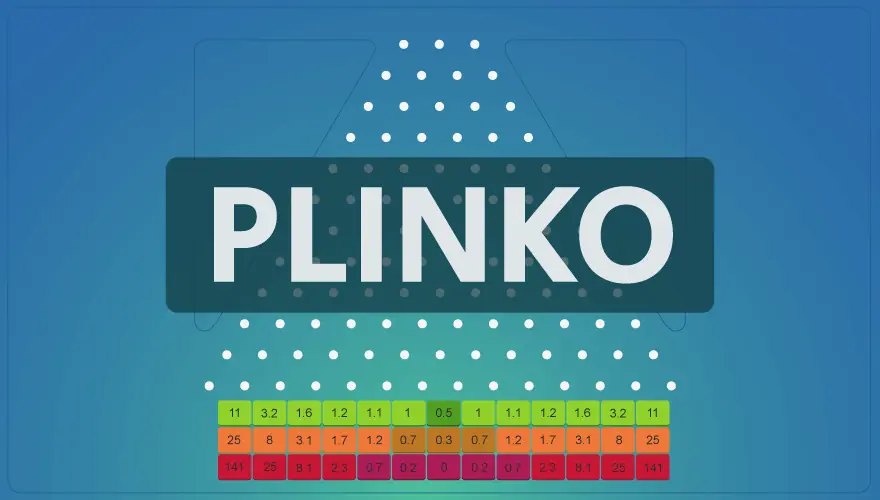
Plinko is a probability-based casino game built around a vertical board filled with pegs. A ball is released from the top and deflects from peg to peg until it reaches one of the payout slots at the bottom. Each slot carries a multiplier. Most outcomes cluster around the center of the board, where the multipliers are usually smaller. The far edges tend to contain the larger prizes, but they are hit less often.
That description sounds almost mechanical, and that is part of its appeal. Players do not need to learn paylines, Parimatch Casino bonus page symbols, reel modifiers or card values. In a few seconds, they understand the basic action. But what makes Plinko stand out is the contrast between visual clarity and emotional uncertainty. You can watch the ball travel in real time, which creates the feeling that the outcome is unfolding in front of you rather than being hidden inside a spin animation.
At Parimatch casino, Plinko typically attracts players who want faster feedback than many slots provide. There is no long setup phase, no need to wait for a feature buy decision, and no complicated table-game etiquette. You choose a stake, set a risk level, select the number of rows if available, and start dropping balls. That directness matters. It lowers the entry barrier, but it also makes the pace more intense than many first-time players expect.
One thing I find especially important: Plinko often looks “casual” to beginners because the board resembles an arcade concept. In reality, the payout structure can be severe at higher settings. This is one of those games where the cheerful visual design can mask how quickly bankroll swings appear.
How the Plinko mechanics actually work
The core mechanic is simple: each peg collision sends the ball either left or right, and after a sequence of these deflections, the ball lands in a final slot. But the practical logic of Plinko is not about one bounce. It is about the full distribution of many possible paths. The center receives more traffic because there are more path combinations leading there. The outer edges are harder to reach because they require a more specific sequence of directional outcomes.
That is why the multiplier map usually follows a familiar pattern: low values in the middle, higher values toward the sides. The board is not rewarding “good timing” or “better aim” in any meaningful skill-based sense. The result is generated through chance, even if the movement looks physically intuitive. For the player, this means one important thing: the visual journey can feel readable, but it should not be mistaken for controllable. For a closer look at the games library, Parimatch Casino registration and casino rules sorts the titles by theme and pace.
Most versions of Plinko, including the format players expect to see at Parimatch casino Plinko, revolve around three adjustable variables:
- Bet size — determines the base stake for each drop.
- Risk level — changes how sharply payouts are distributed.
- Rows — affects the number of deflections and usually the shape of possible outcomes.
Risk level is the setting that changes the experience most. On low risk, the board usually gives more frequent modest returns and fewer extreme multipliers. On high risk, the center often becomes less forgiving relative to the rare top-end prizes at the edges. In plain terms, you trade steadier small results for a thinner chance at a much bigger hit.
The row count matters too. More rows mean more bounce decisions before the ball reaches the bottom. That can widen the emotional arc of each drop because the path is longer and the edge outcomes become more dramatic in perception. It also changes the payout table. A board with more rows may offer larger headline multipliers, but those eye-catching numbers are there precisely because they are harder to reach consistently.
| Setting | What it changes | What it means in practice |
|---|---|---|
| Bet size | Value of each drop | Direct impact on bankroll speed and session cost |
| Risk level | Payout distribution | Low risk smooths results; high risk increases sharp swings |
| Rows | Path length and multiplier layout | More rows can raise top potential while making rare outcomes feel even rarer |
A useful observation here: many players focus on the maximum multiplier shown on the board, but the more meaningful question is how often the middle slots pay relative to your stake. In Plinko, the headline number is not the whole story. The shape of the distribution is the real product.
Why the game feels engaging and how its pace works in a real session
Plinko builds interest through short, self-contained rounds. Every drop resolves quickly, and every result is visible from start to finish. This creates a play rhythm that is very different from a slot with long reel animations or a live table game with dealer pacing. The tempo can be calm if you release one ball at a time and watch each path. It can also become extremely fast if the interface allows repeated drops or auto-play style repetition.
What keeps players involved is not just the possibility of a large multiplier. It is the repeated near-miss sensation created by the ball drifting toward an edge, then bouncing back toward the center. That visual tension is one of Plinko’s strongest design tools. Even when the final result is modest, the route itself can feel eventful.
I think this is one reason the format has become so visible online. It produces watchable moments without needing a long explanation. A viewer can understand the situation instantly: the ball is heading toward a premium slot or it isn’t. But from a player’s perspective, that same clarity can be deceptive. Because rounds are so short, bankroll movement can accelerate before the player fully registers how repetitive the cycle has become.
In practical terms, the session rhythm usually follows one of two patterns:
- Controlled observation mode — lower stakes, slower drops, more attention to board settings and result distribution.
- Impulse loop mode — rapid-fire drops, emotional reaction to edge paths, and faster stake exposure than intended.
The second pattern is where many mistakes happen. Plinko does not need bonus rounds to create momentum. The speed of resolution does that on its own. If a player is used to slower slots, the jump in round frequency can be easy to underestimate.
One of the more memorable things about Plinko is that silence between outcomes is almost nonexistent. In a slot, dead spins can blur together. In Plinko, every drop has a visible journey, so even low-value results feel active. That makes the game seem “busy” even when the balance trend is flat or negative.
How risky Plinko really is and who is likely to enjoy it
Plinko can range from relatively mild to highly aggressive depending on the selected setup. That flexibility is one of its strengths, but it also means players should not talk about the game as if it has one fixed personality. A low-risk board is not the same experience as a high-risk board with more rows and a larger top multiplier. They may share the same interface, but the bankroll behavior can be completely different.
If I had to describe the risk profile in practical terms, I would put it this way: Plinko is often more transparent than a slot, but not necessarily safer. You can see the path. You can understand the payout layout. You can follow every result in real time. None of that reduces the underlying randomness. It only makes the randomness easier to watch.
Players who tend to enjoy Plinko usually have at least one of these preferences:
- They like short rounds and immediate outcomes.
- They prefer simple controls over layered slot features.
- They are comfortable with variance and do not need constant feature triggers.
- They enjoy probability-driven formats where the board layout itself tells the story.
On the other hand, Plinko may not suit players who want narrative progression, bonus stages, symbol combinations or the slower build-up found in many video slots. It can also disappoint players who see a large edge multiplier and assume the session will regularly produce dramatic moments. Most rounds do not end there. The game is built around distribution, not repeated fireworks.
There is also a psychological point worth stressing. Because Plinko looks transparent, some players feel they are making “informed” decisions by changing rows or risk levels. They are making meaningful format choices, yes, but not predictive ones. These settings shape exposure; they do not reveal where the next ball will land.
What players should understand about probability, variance and likely outcomes
The most important thing to understand before playing Parimatch casino Plinko is that visible randomness can still be harsh randomness. The board gives a strong impression of physical logic, but the practical result over time is still governed by the game’s payout model and return structure. In other words, the path may look organic, yet the session outcome still depends on a probability distribution weighted toward certain landing zones.
Most boards are center-heavy. That means the ball is statistically more likely to finish in the middle region than at the outer extremes. Since the center usually carries lower multipliers, many rounds will return small values, partial stake recovery or less. The outer slots are where the larger prizes live, but their rarity is exactly why those prizes can be offered at all. Before you make a deposit, it is worth reading Aviator crash game guide at Parimatch Casino for Australian players for the fee and speed details.
Here is the mistake I see often: players remember the extreme outcomes because they are visually striking, then unconsciously treat them as a realistic session target. In truth, Plinko sessions are usually defined by the ordinary landings, not the spectacular ones.
| Player assumption | What usually happens in practice |
|---|---|
| “The ball nearly reached the edge, so a big hit must be close.” | Each drop is independent in practical terms; near-misses do not improve the next result. |
| “A simple board means simple bankroll behavior.” | High-risk settings can create very sharp balance swings despite the clean interface. |
| “More rows automatically means better value.” | More rows may increase top potential, but often make rare outcomes less frequent. |
| “I can read the bounce pattern.” | The path is watchable, not reliably predictable. |
Another practical point: if the game offers a demo mode, it is useful not because it predicts live results, but because it helps the player understand rhythm. That matters in Plinko more than many expect. A quick test session can reveal whether the speed, repetition and payout spread feel comfortable or irritating before real money is involved.
How Plinko differs from slots and other casino formats
Plinko sits in an interesting position between casino gaming and probability entertainment. It does not behave like a classic slot because there are no reels, paylines, symbol stacks or free spin structures driving suspense. It also does not behave like roulette, where the betting grid itself is the main strategic interface. And unlike crash games, where the key decision is when to cash out, Plinko usually resolves the result after the drop begins, with no mid-round intervention.
The biggest difference from slots is the source of attention. In a slot, suspense often comes from combinations, bonus entry, expanding reels or feature chains. In Plinko, suspense comes from trajectory. The player watches a single object move through a field of uncertainty toward a fixed payout map. That is a cleaner and more immediate visual model.
Compared with roulette, Plinko feels less about pre-round choice and more about post-release observation. Compared with blackjack, it removes decision pressure almost entirely. Compared with crash, it removes timing pressure but keeps the intensity of short rounds. That makes it attractive to players who want direct action without having to learn a strategy framework.
Still, the simplicity has a trade-off. Plinko offers less variety within each round than a feature-rich slot. If a player enjoys layered mechanics, changing reel sets or bonus game progression, Plinko may feel too stripped back after the first phase of curiosity.
One sharp observation I would make here: slots often hide variance behind spectacle, while Plinko exposes variance through repetition. That difference changes how losses and recoveries are perceived. In a slot, the player may focus on animations and feature anticipation. In Plinko, the player is more likely to focus on the raw pattern of where the balls keep landing.
Strengths and weak points of Plinko in practical use
Every casino format has a gap between how it looks in the lobby and how it behaves over a real session. With Plinko, that gap is especially important. The game looks light, but depending on settings, it can be one of the quickest ways to feel bankroll pressure.
The strongest practical advantages are clear:
- Immediate readability — players understand the core idea in seconds.
- Fast round resolution — useful for those who dislike slow pacing.
- Visible payout structure — the board shows where the larger multipliers sit.
- Flexible session style — low and high risk settings can create very different experiences.
But the limitations are just as real:
- Repetition can arrive quickly — especially for players who need evolving features.
- High variance settings can drain a balance fast — even when the interface feels harmless.
- Near-miss tension can encourage overplay — the ball path makes each drop feel more “alive” than it may be financially.
- Large multipliers may dominate expectations — despite being statistically uncommon.
What stands out to me is that Plinko is unusually honest and misleading at the same time. Honest, because the board openly shows the payout landscape. Misleading, because that openness can make players underestimate how punishing the rare-event model becomes once they move to aggressive settings.
What to check before launching Plinko at Parimatch casino
Before starting a session at Parimatch casino, I would advise any player to spend a minute on the settings instead of treating Plinko like a one-click novelty. The setup choices are the session. They are not cosmetic.
Here is what matters most:
- Look at the risk level first. If you do not actively want steep swings, avoid starting on high risk just because the top multiplier looks attractive.
- Check the rows and payout map together. Do not evaluate one without the other. More rows can change the emotional feel and the rarity profile.
- Set a stake that matches the speed of the format. A bet that feels small in a slot may cycle much faster in Plinko.
- Decide how you want to play before the first drop. Watching each ball manually creates a different discipline from rapid repeated drops.
If a player wants a measured experience, lower stakes and lower risk are usually the sensible entry point. If the goal is chasing high multipliers, then the player should go in with clear expectations: long stretches of ordinary results are not a sign that the edge slots are “due.” They are part of the design.
This is where Plinko becomes a very revealing game. It shows what kind of player you are. If you enjoy clean visuals, short rounds and probability laid bare, it can be genuinely engaging. If you need variety, control or strategic depth, its appeal may fade quickly.
Final verdict
Parimatch casino Plinko offers a simple concept with a much sharper practical edge than its appearance suggests. What the game really delivers is not complexity, but concentrated randomness: quick rounds, visible ball movement, adjustable risk settings and a payout structure that can feel steady or severe depending on how you configure it.
Its key strengths are easy to identify. Plinko is accessible, fast, visually clear and immediately understandable. It gives players a direct line to the core idea of chance without hiding behind layers of symbols or lengthy feature sequences. For the right player, that makes it refreshing.
The caution is just as important. The same speed and clarity that make Plinko attractive can also make it risky in a very practical sense. High-risk settings can produce abrupt balance swings, and the visual drama of near-edge drops can tempt players into overestimating how often big multipliers should appear.
My honest conclusion is this: Plinko is worth trying if you want a casino format built on pace, transparency and short-form tension. It is less suitable if you prefer strategic decision-making, slower sessions or the richer structure of classic slots. In short, Plinko does not promise depth in the traditional sense. It promises a clean, watchable, probability-driven experience. For some players, that is exactly the point. For others, it will feel too exposed, too repetitive or too unforgiving. Understanding that difference before the first drop is what makes the game easier to judge fairly.
FAQ
How does Plinko ball drop gameplay work step by step?
Pick your stake and start the round. The ball drops through the board and lands in one of the result pockets, each with its own multiplier. The game then totals the win or loss for that drop based on where the ball lands.
What controls the multiplier result in Plinko?
The multiplier comes from the pocket where the ball finishes. Each pocket is linked to a specific payout multiplier, so the outcome is determined by the final landing position for that round.
Is Plinko considered a high-risk game on an online casino site?
Plinko outcome can change quickly because each drop depends on where the ball lands. The volatility can feel higher than slower, decision-based games, since there is no strategy to force a specific multiplier.
What should be checked if the Plinko game fails to load or freezes?
Refresh the page and try launching the round again. Verify the device has a stable connection, and ensure pop-ups or blocked scripts are not interfering. Clearing the browser cache can also help if the game assets did not download properly.
